When an Ending Deserves as Much as a Beginning
On ritual, closure, and moving through separation and divorce with intention

Photo by Sharissa Johnson
We know how to mark beginnings.
We gather our people. We cook food, play music, speak vows. We build ceremonies around birth, marriage, the start of something new. We understand, instinctively, that these moments deserve to be witnessed.
But when something ends — a marriage, a partnership, an identity we've carried for years — we tend to disappear. We perform our way through it. We move on quickly, or try to, because that's what's expected.
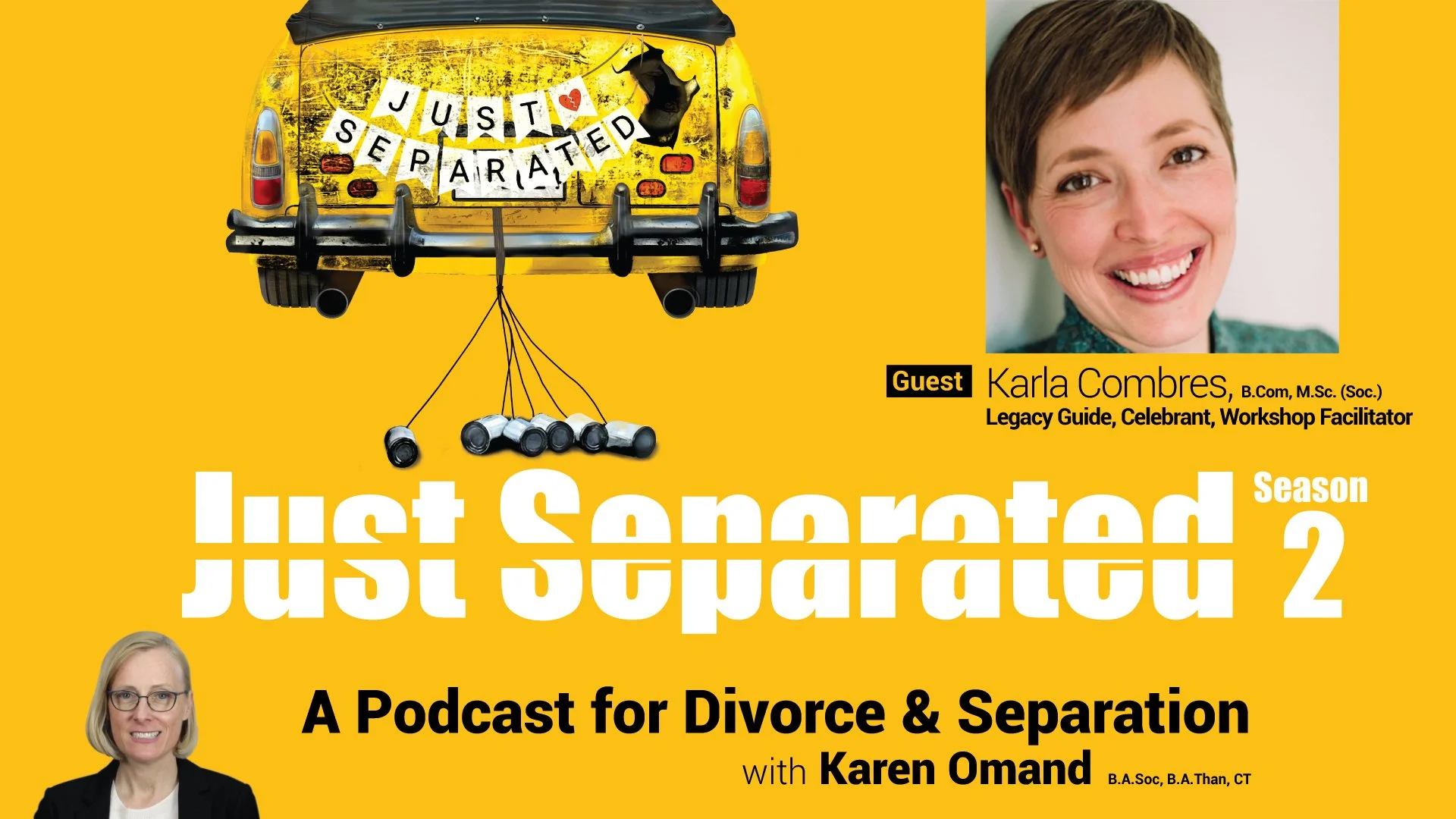
I was recently a guest on Karen Omand's Just Separated podcast. Karen is a divorce strategist and thanatologist who brings a rare depth to this conversation, and together we explored something I find myself coming back to again and again in my work: the idea that endings deserve the same reverence we give to beginnings.
Something more honest than a performance.
When we mark beginnings but abandon endings
When you entered a marriage or partnership through ritual, through a public declaration witnessed by the people who matter most to you, something was set in motion. A vow isn't just words. It's an intention, held in community.
And when that chapter closes without any corresponding ritual to acknowledge it, that intention doesn't simply dissolve. It lingers. It shows up as unfinished business in the next relationship. As grief that has nowhere to go and a story without a proper ending.
This is why I often invite people navigating separation to consider some form of ritual closure, whether shared with a partner or held quietly among close witnesses. Not to perform grief, but to honour what was real. To say: this mattered, and now it's changing, and I want to move forward with intention rather than by accident.

Photo by Jessica Mangano
Loss doesn't only arrive through death
So much of my work is rooted in the recognition that loss doesn't only arrive through death. Retirement. Divorce. Illness. Empty-nesting. These are real losses, and they deserve to be witnessed just as much as the ones that come with a funeral.
And yet so few of us have language for them, let alone ritual. That's what this conversation with Karen is really about — what becomes possible when we start treating our hardest endings with the same intention we bring to our most sacred beginnings.
The conversation
In the podcast, we go deeper into all of this — the role of ritual in closure, why community matters even when it's just one person, and what it actually looks like to reclaim authorship of your own story after a major ending.
You can listen to the full conversation here.
When the spark feels dim
One of the questions Karen asked me near the end of our conversation was simple and hard at the same time: what do you say to someone in the overwhelming early days of a separation?
I answered as honestly and humbly as I could, noting that I'm not the expert in anyone else's life. What I offered wasn't a framework or a roadmap. Just this: tune into aliveness.
Find the small thing that reminds you life is still moving. It doesn't have to be joyful. It might be a piece of music that soothes you, the way light falls through a window, your kids playing in the other room. Maybe it's going to the airport and watching people arrive.
Whatever it is, it's a reminder that the spark is still there. It might feel dim right now. But it can be rekindled.
And slowly, gently, you build on that.
A place to continue the conversation
If you're in the middle of an ending right now, or sitting with one that never quite got its proper closure, I'd love to have you join us in the Heart of Being Human. It's a free online gathering, twice monthly, where people come to have the kinds of honest, unhurried conversations that are hard to find anywhere else.

Photo credit: Emma Love Photography
Author: Karla Combres
Karla Combres is a Legacy Guide and Celebrant based in Saskatchewan, Canada, serving clients worldwide.
She supports individuals, couples, families, and organizations through life's most significant transitions, helping people move through change with presence, intention, and meaning.
Drawing on years of work at the end of life and across every kind of threshold moment, she offers custom ceremonies, 1:1 guidance, and workshops and keynote speeches.
Read more about Karla here.